Author Archives: Walker Prudent
I am a well-educated young man benefiting from having ADHD; as I am known to fixate on a lot of things, with an above genius level EQ and IQ. I can reach the peak of the ice burg, as in the opposite of titanic. I won't sink, but I will rise!!!


25 Years After Titanic Topped $1 billion at the Box Office, James Cameron Is Still Smashing Records
With Titanic and his two Avatar films, director James Cameron has made high-risk box office gambles. He keeps winning them, too.

Exactly 25 years ago today, Titanic made box office history. The 1997 romance starring Leonardo DiCaprio and Kate Winslet as star-crossed lovers aboard the doomed ocean liner became the first movie to earn more than $1 billion worldwide.
Although some had predicted Titanic would tank just like its namesake, director James Cameron’s film was a massive critical and commercial success, becoming the highest-grossing film ever by 1998. It held that distinction for 12 years before it was surpassed by Cameron’s 2009 sci-fi adventure Avatar, which to date has grossed $2.9 billion.
Cameron is still smashing box office records today. His sequel Avatar: The Way of Water (2022) surpassed Titanic last month to become the third-highest grossing film ever worldwide (behind Avengers: Endgame). It has earned nearly $2.27 billion so far, according to Box Office Mojo, and it’s not even out of theaters yet.
How does Cameron keep doing it? Each of his record-breaking blockbusters have followed a similar pattern: epic movies so ambitious in scope that new technology had to be developed just to make them happen, which in turn meant historically large budgets.
They all took the same gamble: huge box office returns or bust. Cameron, himself, called it the “worst business case in movie history,” and told GQ that Avatar 2 was so expensive to make, it wouldn’t break even unless it was “the third or fourth highest-grossing film in history.”
Expectations of Titanic Proportions
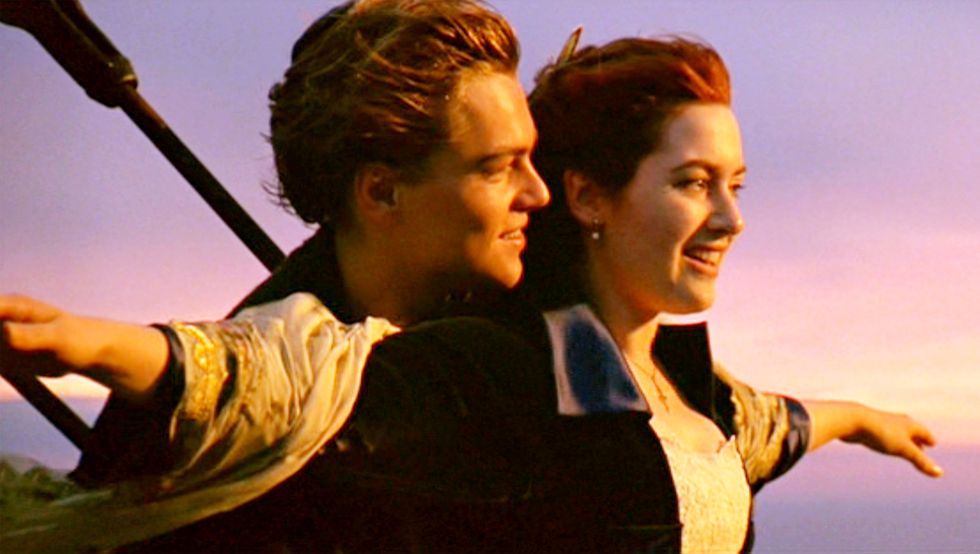
Cameron’s penchant for high-budget cinematic gambles began with Titanic. Despite directing box office hits like the Terminator films, Aliens (1986), and True Lies (1994), Cameron had an usually ambitious undertaking on his hands in Titanic. Cameron spent 21 days filming actual Titanic wreckage underwater and would need the right set to create his vision.
For the film, 20th Century Fox built the cutting-edge Baja Studios overlooking the Pacific Ocean in Baja California, Mexico. The $20 million studio boasts some of the world’s largest water tanks built for underwater filming, with one capable of holding 17 million gallons. It also includes an “infinite horizon” tank that gives the impression of merging with the Pacific and housed a 775-foot Titanic replica.
With a budget of $200 million, Titanic was the most expensive film ever made at the time, and many feared it would become an historic financial failure. Cameron offered to forfeit his share of the profits to keep the movie alive, and when studio executives suggested cutting a full hour of footage, Cameron reportedly replied, “You want to cut my movie? You’re going to have to fire me! You want to fire me? You’re going to have to kill me!”
Of course, those fears proved unfounded, as Titanic became an unprecedented financial hit and won 11 Academy Awards, including Best Picture.
An Even Higher Bar for Avatar

For his next project, Avatar, Cameron went even further, pushing limits in terms of budget and the development of filmmaking technology. Filming for Avatar was supposed to begin immediately after Titanic, but Cameron’s vision for a sprawling sci-fi adventure film featuring blue-skinned aliens on the moon Pandora was so ambitious, the technology to bring it to fruition simply didn’t exist. So first, they had to create it.
Cameron worked with Wētā FX, a New Zealand–based company behind the visual effects for the Lord of the Rings trilogy, to develop a wide variety of technological innovations. Most important were new systems for motion-capture and face-capture animation that were needed to turn the actors’ performances into their photorealistic Na’vi alien counterparts.
Avatar’s massive budget of $237 million once again created fears of financial failure. Executives thought it wouldn’t pull a profit unless audiences saw it multiple times. It seems they did just that: Avatar not only surpassed Cameron’s own all-time worldwide box office record with Titanic, the Oscar-winning film became the first movie in history to gross more than $2 billion.
Avatar 2: A Splashy Sequel

Following the success of Avatar, Cameron originally planned for its first sequel to reach theaters in 2014. Instead, it remained mired in massive delays for years, not least of which because, once again, new film technology had to be developed to achieve Cameron’s vision.
Avatar: The Way of Water was again set on Pandora, but the action this time focuses on an oceanic clan on the moon’s sea reefs. This would require performance capture scenes to be filmed underwater, which had never been done before. It took Wētā FX about 18 months to develop the necessary motion capture system, the largest visual effects project in the company’s history.
As a result, the sequel’s budget was even bigger than its predecessor, with some reports placing it at about $460 million. The stakes were once again high, but as Deadline reported, studio executives this time around took the position: don’t even bet against James Cameron.
With Avatar: The Way of the Water continuing its historic box office run and earning four Oscar nominations including Best Picture, it would seem Cameron’s personal philosophy has paid off again. As he told The New Yorker: “If you set your goals ridiculously high and it’s a failure, you will fail above everyone else’s success.”
The Greensboro Four: The Men Who Sparked the Sit-In Movement
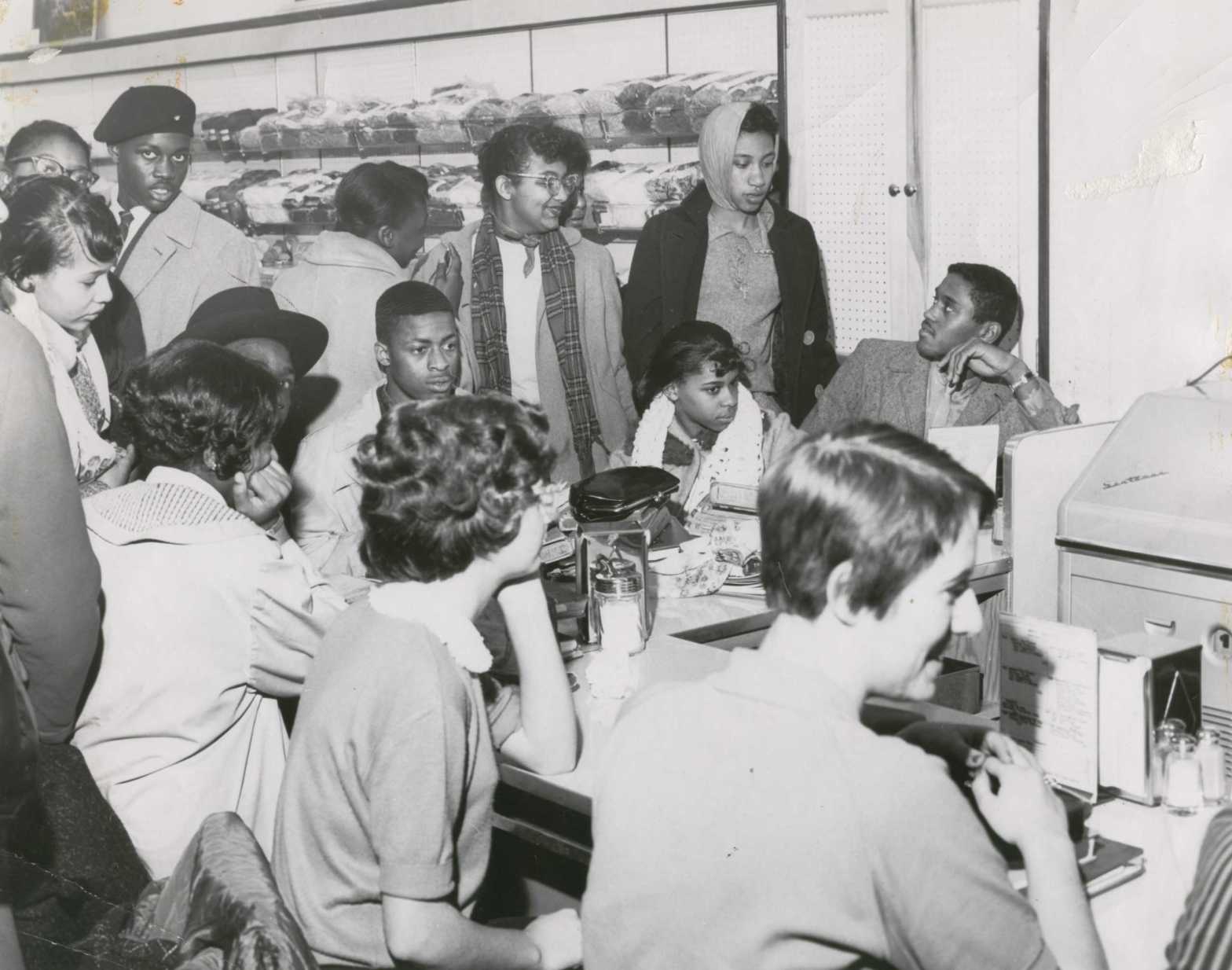
Four Black students sat at a “whites only” lunch counter in 1960 and sparked the sit-in movement.
“Cocaine Bear” Drug Smuggler
The Wild True Story behind the “Cocaine Bear” Drug Smuggler
Cocaine Bear plays fast and loose with a lot of facts, but the story of drug smuggler’s ill-fated plane trip is all too real.
The Cocaine Bear, also known as Pablo Eskobear (sometimes spelled Escobear), was a 175-pound (79-kilogram) American black bear that overdosed on cocaine in 1985. The cocaine had been dropped by drug smugglers in the wilderness in Tennessee, United States.
The bear was found dead in northern Georgia and was stuffed and displayed at a mall in Kentucky. It inspired the 2023 comedy horror film Cocaine Bear.

On September 11, 1985, former Lexington, Kentucky, police department narcotics officer turned drug smuggler, Andrew C. Thornton II was trafficking cocaine from Colombia into the United States. After dropping off a shipment in Blairsville, Georgia, Thornton and an accomplice departed in a self-piloted Cessna 404 Titan. En route, the duo dropped a load of 40 plastic containers of cocaine into the wilderness before abandoning the plane above Knoxville, Tennessee. Thornton was killed instantly when his parachute failed to open. According to the FBI, Thornton dumped his cargo because the load of two men, in addition to the cocaine, was too heavy for the plane to carry.
On December 23, the Georgia Bureau of Investigation reported finding a dead black bear that had eaten a large amount of the cocaine from the jettisoned containers. The containers had held about 75 pounds (34 kilograms) of cocaine, valued at $2 million, and by the time the scene was studied by government authorities, all of the containers had been ripped open, with their contents scattered. The chief medical examiner from the Georgia State Crime Lab, Dr. Kenneth Alonso stated that its stomach was “literally packed to the brim with cocaine,” although he estimated the bear had absorbed only 3 to 4 grams into its bloodstream at the time of its death.
Dr. Alonso did not want to waste the body of the bear, so he had it taxidermied and gave it to the Chattahoochee River National Recreation Area. The Bear, however, disappeared until it emerged again in a pawn shop. Eventually, it made its way to the “Kentucky for Kentucky Fun Mall” in Lexington, Kentucky, where it remains to this day.
On March 9, 2021, Universal Pictures announced that a film, Cocaine Bear, was in development. It was also confirmed that the film would be directed by Elizabeth Banks. However, the film takes some liberties, as the real events which occurred between the bear’s ingestion of cocaine and its death are not known; notably, the bear did not kill any people, unlike the bear portrayed in the film. The film was released on February 24, 2023.
 Stories and Biographies